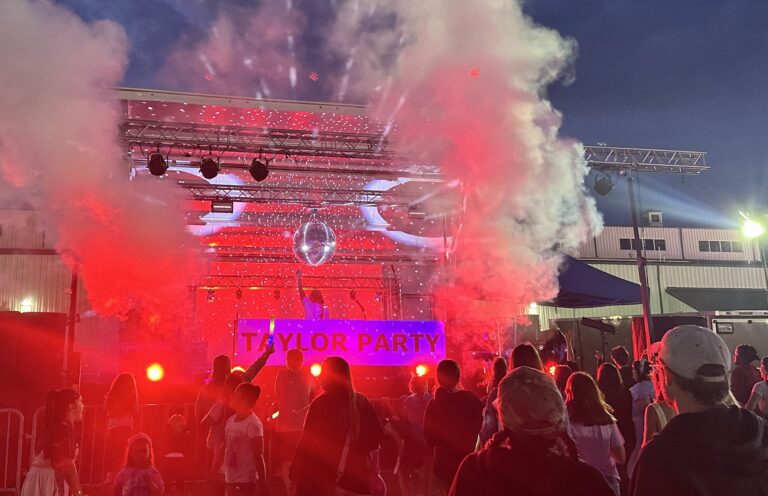
“Starry Night” is one of the most requested atmospheres we see across galas, weddings, and immersive experiences. While the end result may look similar at a glance, the way it’s achieved can vary dramatically in quality, control, and investment.
Below are three common approaches—each with its own strengths, limitations, and ideal use cases.
Method One: Reflective Scatter
Rotary Light Effects
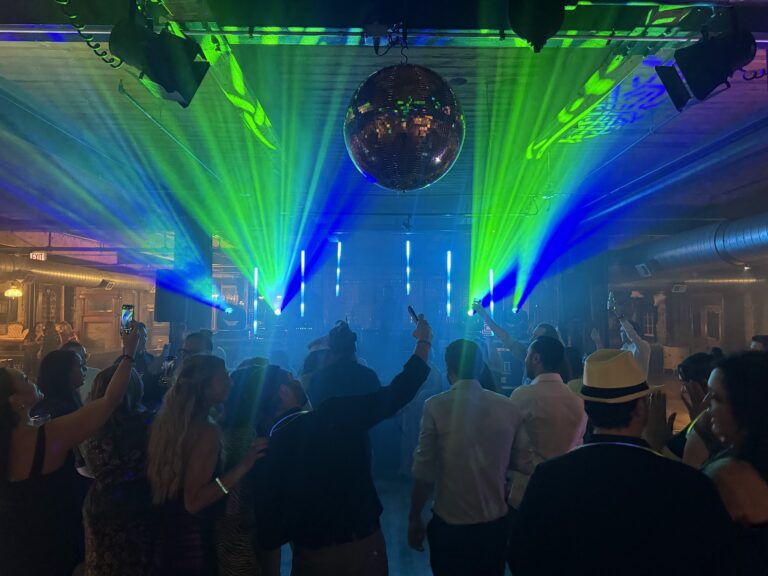
This approach uses reflective rotary fixtures—most commonly mirror balls—to scatter light across surfaces. As light hits the rotating mirrors, it creates dozens (or hundreds) of moving dots throughout the room.
In higher-density applications, multiple rotary sources may be used to increase coverage and intensity. You’ll often notice brighter clustering toward the center of the projection, especially when two sources overlap.
Best for:
- Dance floors and high-energy environments
- Moving, dynamic “twinkle” effects
- Budget-conscious enhancements
Limitations:
- Less control over placement and pattern
- Dots are constantly moving (not a static “sky”)
- Coverage can feel uneven depending on positioning
Method Two: Precision Projection
Gobo Star Fields
This is the professional standard for creating a clean, controlled starry effect. Using lighting fixtures with custom gobos (metal or glass templates), we project star patterns onto walls, ceilings, or drapery. Usually this requires several fixtures and gobos.
Best for:
- Elegant, consistent “starry sky” looks
- Weddings, galas, and corporate environments
- Controlled coverage across specific surfaces
Considerations:
- Larger spaces require many fixtures for full coverage
- Visible beam circles may appear if not carefully blended
- Higher investment than reflective effects
Method Three: Architectural Starcloth
Integrated Star Panels
This method involves a physical material—typically starcloth or fiber-optic fabric—with embedded light points. The result is a highly uniform, premium “night sky” that feels architectural rather than projected.
Permanent installations use rigid panels with integrated lighting, while temporary event versions use draped fabric systems. Both create a dense, evenly distributed star field.
Best for:
- Luxury environments and statement ceilings
- Fully immersive, consistent star coverage
- Photo/video-focused events
Considerations:
- Requires rigging or structural integration
- Custom builds and large-scale installs can be expensive
- Less flexible once installed compared to lighting-based methods
Which Starry Night Effect Is Right for You?
Each approach serves a different purpose:
- Looking for energy and motion? Reflective scatter delivers a lively, dynamic effect.
- Want a clean, elegant atmosphere? Gobo projection offers the best balance of control and scalability.
- Going for a true “wow” moment? Starcloth or architectural installs create the most immersive result.
At MΛSSIVE Audio Visual, we regularly combine these techniques—layering projection, movement, and physical elements—to create a starry environment that feels both natural and unforgettable.
If you’re exploring options, we’re happy to design a solution tailored to your space, budget, and vision.